A popcorn texture ceiling can make a room feel dated, but the right fix depends on its condition, age, and your plans for the space. Learn how to identify the texture, weigh repair versus covering or removal, and address water damage before work begins.
Popcorn ceilings can often be repaired, repainted, covered, or removed depending on their condition, damage, and your renovation goals. Small flaws may be patchable, while intact but dated texture can be refreshed with paint. Always address leaks and water damage first. For ceilings installed before the 1980s, arrange asbestos testing before sanding, scraping, drilling, or removal.
A popcorn texture ceiling has a rough, raised surface that looks more like small bumps than a flat finish. Unlike many textured ceilings, it contains pieces of sprayed-on material mixed with solid particles, creating a thick, uneven texture across the ceiling. Existing popcorn may appear white, off-white, or painted over several times. In older homes, popcorn ceilings were often used to hide drywall seams and reduce sound throughout the home. At MrWalls Drywall & Painting, we inspect the condition, age, and adhesion of the popcorn ceiling before recommending repair, removal, or a new ceiling texture.
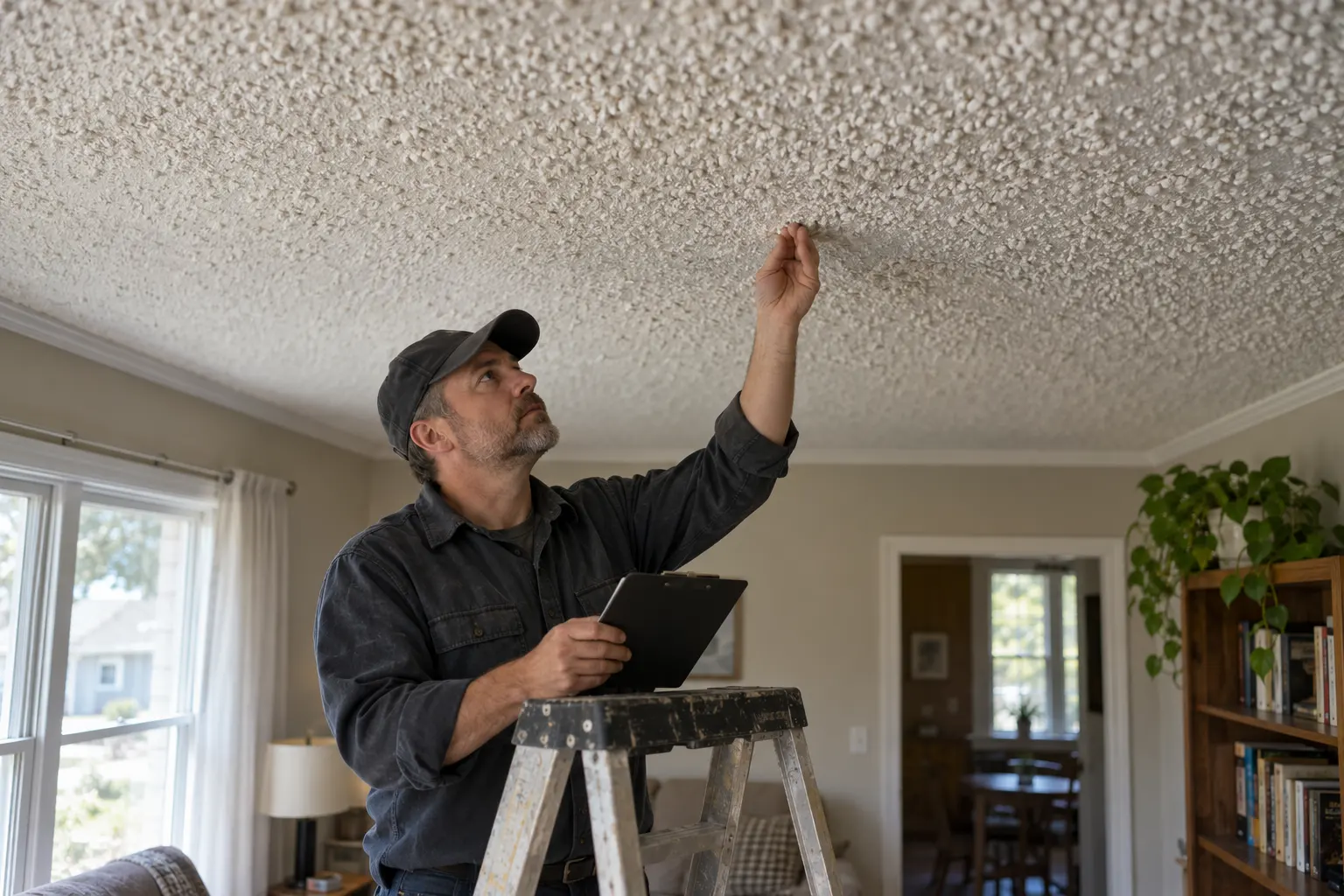
At MrWalls Drywall & Painting, we help homeowners choose the right path for their ceiling: repair, cover, or full texture removal. The best option depends on the interior’s condition, age, and your plans for the home. We also consider how long you plan to stay in the home and the finish you want for the space.
Patching popcorn works well when damage is small and the surrounding ceiling is sound. We first identify the cause, especially if water damaged the drywall, then dry and repair the area before matching the existing coating. Exact texture matching requires careful finishing, but a skilled repair can make a stain, crack, or small hole far less noticeable without replacing the whole ceiling.
Painting popcorn makes sense when the textured surface is intact but looks yellowed, dusty, or dated. A fresh coat brightens the room and adds a protective finish without disturbing the texture. Proper equipment matters: we use the right sprayer, roller, and paint thickness to avoid pulling loose material down. If the ceiling has peeling areas or past moisture damage, repair comes first.
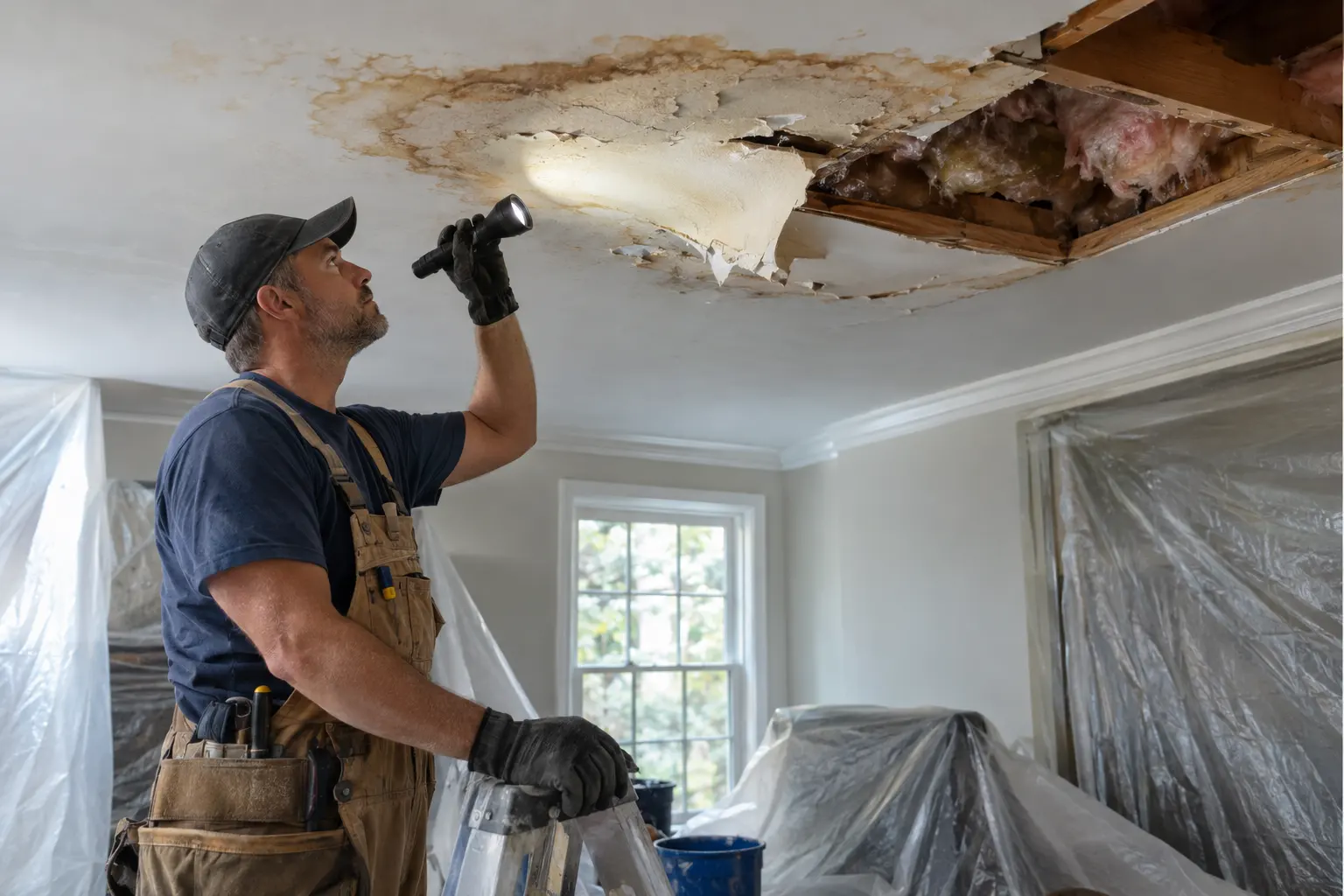
Before we repair or remove a popcorn ceiling, we look for signs of water damage. A brown ring, peeling paint, soft drywall, or a musty smell can point to an active or past leak. We also check for wet insulation or foam above the affected area, which can hold moisture and contribute to ongoing damage. Covering the stain may briefly improve its appearance, but the damage can return if the source is still there. As a drywall contractor, I recommend fixing roof, plumbing, or HVAC leaks first, then allowing the area to dry fully. At MrWalls Drywall & Painting, our professional team can assess damaged ceiling drywall, replace weakened sections, and create a clean, lasting finish once the moisture issue is resolved.
Some older popcorn ceilings may contain asbestos in the texture. Before we repair, scrape, or open a ceiling, we help homeowners understand the age of the material and the safest next step.
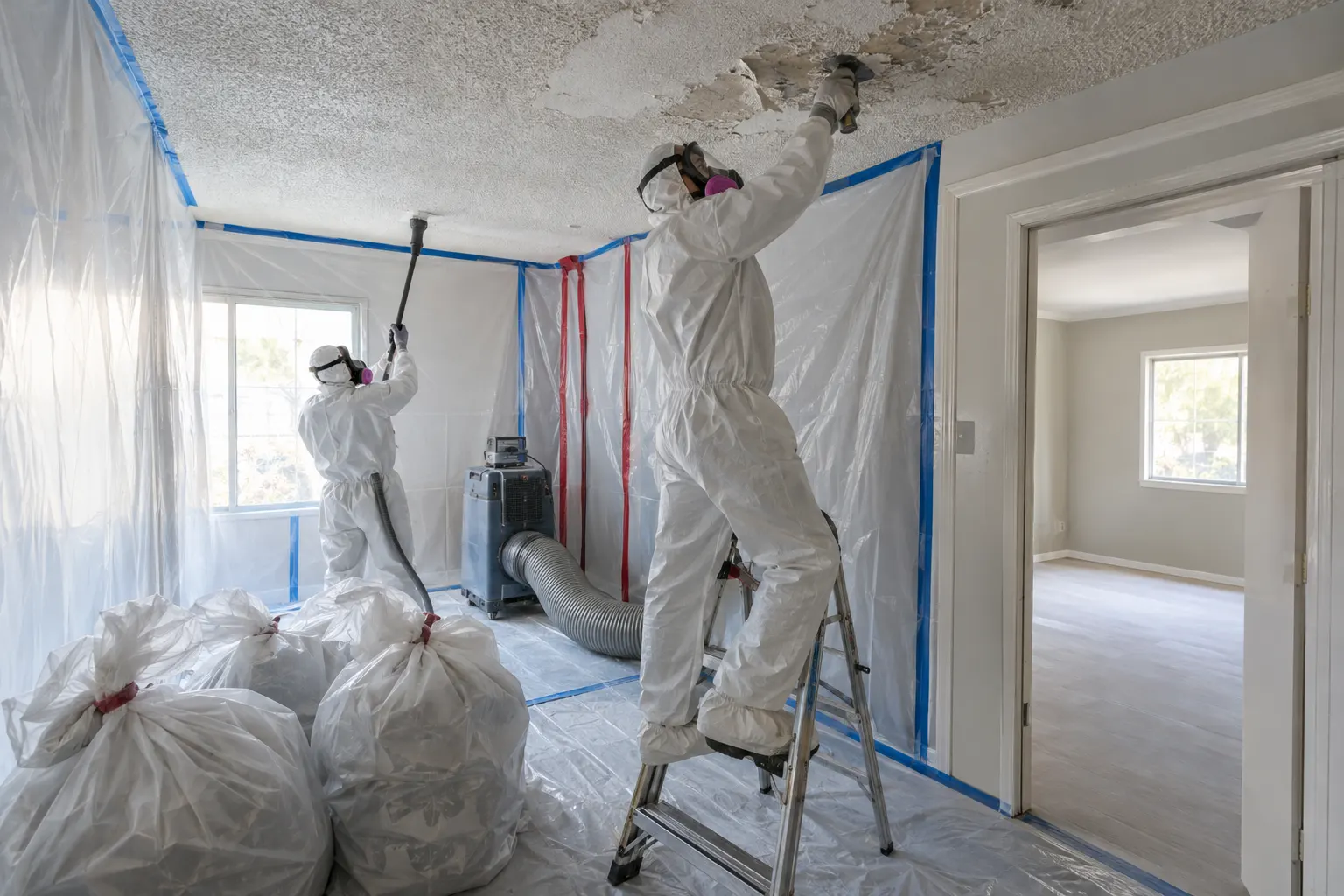
If a ceiling was installed before the 1980s, arrange asbestos testing before any texture removal or ceiling removal. A licensed testing professional can collect a small sample safely and provide clear results. Do not sand, scrape, drill, or use ordinary equipment on suspect material. If asbestos is present, protective procedures and trained specialists are essential.
Asbestos removal requirements differ by city, county, and state. In many areas, a licensed contractor must handle removal, containment, transport, and disposal. We never recommend treating possible asbestos as a do-it-yourself project. MrWalls Drywall & Painting can assess the ceiling after clearance work is complete and provide the drywall repair or new finish your space needs.
Matching ceiling texture takes more than a quick patch. At MrWalls Drywall & Painting, we study the existing texture, popcorn pattern, coating, and finishing so the repaired area blends with the surrounding smooth or textured surface. Our detailed finishing process helps create an even appearance that is difficult to distinguish from the rest of the ceiling.
Even careful painting popcorn texture can leave a subtle difference in sheen or color around a repair. On an older ceiling, sunlight, cooking, and normal interior wear can change the paint over time. We often recommend repainting the full ceiling after the repair is complete. A uniform coat helps the patched area blend in and gives the room a clean, consistent finish. If you prefer a professional result without guesswork, our team can handle the repair and repainting together.

As a drywall contractor, I help homeowners choose the right path based on the ceiling’s condition, budget, and plans for the room. Ceiling removal gives the cleanest reset, while texture removal can work when the existing popcorn is sound and properly tested. Repair is often best for a small damaged area, especially when matching nearby textured ceilings matters. Covering existing popcorn with new drywall is another strong option for ceilings with stubborn texture or uneven surfaces. In some cases, a foam roller can help apply a suitable coating before finishing, but it will not correct loose texture or hidden damage. At MrWalls Drywall & Painting, we explain the tradeoffs clearly before work begins, so you can choose a finish that looks right and lasts.
| Option | Best suited for | Main advantage | Key consideration |
|---|---|---|---|
| Repair | A small damaged area | Helps preserve nearby textured ceilings | Matching the existing texture matters |
| Texture removal | Existing popcorn texture that is sound and properly tested | Removes the existing texture without full ceiling removal | The popcorn must be in sound condition and properly tested |
| Ceiling removal | Ceilings needing a complete reset | Provides the cleanest reset | Consider the room’s condition, budget, and plans |
| Covering with new drywall | Ceilings with stubborn texture or uneven surfaces | Creates a new surface over existing popcorn | It covers the existing ceiling rather than removing it |
Once popcorn texture is removed, your ceilings can take on a clean, updated look. At MrWalls Drywall & Painting, we help homeowners choose smooth drywall finishes or lightly textured options that suit the room, lighting, and style of the home.
A smooth ceiling feels crisp and modern, but it requires careful finishing because natural light can reveal small flaws. A subtle ceiling texture can soften that effect and add warmth to an interior without looking dated. We assess the existing drywall, complete needed repairs, and explain how each finish will look in your space. Whether you prefer a seamless finish or a refined texture, our crew prepares the surface for lasting results.
Some popcorn ceiling jobs are simple, but others need a professional eye. At MrWalls Drywall & Painting, we recommend calling a drywall contractor when the ceiling has stains, sagging areas, cracks, or damaged joints. Water damage can hide above the surface and may require more than scraping texture away. A professional can identify the cause, repair the drywall correctly, and create a smooth finish that blends with the rest of the room. If you are unsure whether your ceiling is safe to work on or ready for paint, we can inspect it and explain your best options.
Before we begin popcorn texture ceiling removal, I like to look closely at the home, the ceiling’s condition, and the finish you want afterward. Older texture may need testing before work starts, and water stains or loose drywall should be repaired first. Proper equipment and protective measures keep dust contained and your rooms cared for during the project. At MrWalls Drywall & Painting, we explain the process clearly, prepare the space thoroughly, and handle removal and ceiling repair with the attention a finished room deserves.
At MrWalls Drywall & Painting we repair popcorn texture ceilings and we hear the same questions from homeowners who are deciding what to do with a popcorn ceiling. Can it be repaired? Is painting popcorn a good idea? What happens when patching popcorn leaves a visible spot? And should you worry about asbestos before starting ceiling removal? The right answer depends on the ceiling’s age, condition, and your plans for the room. As a drywall contractor, I help clients weigh simple repairs against a full update, then complete the work cleanly and safely. Here are the key points to consider before you begin.
Yes. Small cracks, stains, and holes can often be patched when the surrounding ceiling is dry, secure, and in good condition. The source of any water damage should be repaired first, then the area can be finished to blend with the existing texture.
Painting is a practical option when the texture is intact but discolored or dusty. Removal may be preferable for loose material, extensive damage, or a smoother updated look. Ceiling age, moisture history, and asbestos testing results should guide the decision.
If the ceiling was installed before the 1980s, arrange professional asbestos testing before scraping, sanding, drilling, or removing texture. If asbestos is found, follow local requirements and use trained, licensed specialists for containment and removal.